Introduction
Not every garage requires a ventilation fan, but in many situations, adding mechanical ventilation can significantly improve comfort and air quality.
Garages often trap heat, fumes, and stale air because they are enclosed spaces with limited airflow. A ventilation fan helps remove this trapped air and replace it with fresh outside air.
Understanding when a ventilation fan makes sense can help homeowners decide whether installing one will provide real benefits.
If you’re unfamiliar with the basics of garage ventilation systems, start with what a garage ventilation fan is and how it works.
Garages That Trap Heat
One of the most common reasons homeowners install ventilation fans is excessive heat buildup.
Garages can become very hot because:
• The roof and garage door absorb sunlight
• Hot air rises and collects near the ceiling
• Limited airflow prevents heat from escaping
In these situations, a ventilation fan can help exhaust hot air and reduce the overall temperature inside the garage.
If you’re wondering how effective this can be, see do garage ventilation fans actually reduce heat.
Garages Used as Workshops
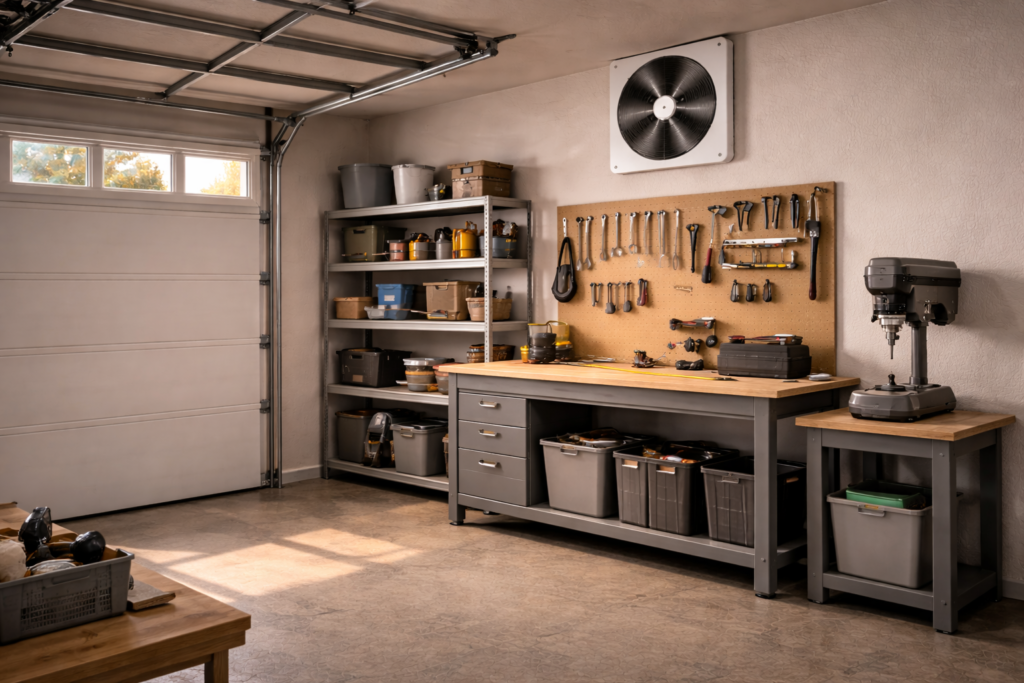
Many homeowners use their garages as workshops or hobby spaces.
Activities such as woodworking, painting, and mechanical work can produce fumes, dust, or odors that accumulate in the garage.
A ventilation fan can help remove:
• Paint fumes
• Chemical odors
• Dust and particles
• Exhaust from small engines
Improved airflow can make the space safer and more comfortable to use for extended periods.
Attached Garages
Garages attached to the home can benefit from ventilation because air contaminants may eventually enter the living space.
Even small gaps around doors or shared walls can allow fumes to move from the garage into the house.
Ventilation helps remove these pollutants before they accumulate.
To learn more about this situation, see do you need ventilation in an attached garage.
Poorly Ventilated Garages
Some garages simply lack natural airflow.
This is common in garages that:
• Have no windows
• Have tight seals around the garage door
• Are heavily insulated
• Have limited wall openings
In these spaces, air may remain stagnant unless mechanical ventilation is added.
A ventilation fan helps keep air moving and prevents heat and humidity from building up.
Garages That Store Chemicals or Fuel
Many garages store items such as gasoline, solvents, fertilizers, and cleaning products.
These materials can release vapors over time, especially in warm conditions.
Ventilation helps remove these vapors and prevents odors from accumulating in the garage.
Choosing the Right Fan Size
Even if ventilation is beneficial, choosing the correct fan size is important.
A fan that is too small may not move enough air to improve conditions in the garage.
To estimate airflow needs, see how much airflow (CFM) a garage needs.
Selecting the right airflow capacity helps ensure the fan provides effective ventilation.
Considering Installation Location
Ventilation fans work best when they are installed where hot air collects.
Most systems are installed:
• High on an exterior wall
• Near the ceiling
• In areas where air can be exhausted outside
Good placement improves airflow and helps remove heat more effectively.
For guidance on positioning, see where a garage ventilation fan should be installed.
When a Ventilation Fan May Not Be Necessary
Some garages already have enough airflow through natural ventilation.
For example:
• Detached garages with multiple windows
• Garages that remain open frequently
• Garages located in mild climates
In these cases, installing a fan may provide only minor improvements.
Evaluating how the garage is used can help determine whether mechanical ventilation is worthwhile.
Conclusion
A garage ventilation fan makes the most sense when a garage traps heat, fumes, or stale air.
Garages used as workshops, attached garages, and spaces with limited airflow often benefit the most from improved ventilation.
By removing hot air and replacing it with fresh outside air, ventilation fans can make garages safer and more comfortable environments to use.
For a complete overview of how these systems work, see our guide to garage ventilation fans.