Introduction
A garage ventilation fan works by removing stale or hot air from the garage and exhausting it outdoors. For the system to work properly, the fan must vent air outside the building rather than into another enclosed space.
Improper venting can reduce airflow efficiency and may allow moisture, heat, or fumes to accumulate inside the structure. Understanding how to vent a garage exhaust fan correctly helps ensure the system performs as intended.
If you’re new to garage ventilation systems, start with what a garage ventilation fan is and how it works.
Why Exhaust Air Must Vent Outside
A ventilation fan removes air from the garage. That air must be released outside the building so it does not accumulate inside walls, ceilings, or attic spaces.
Venting into an enclosed area can cause several problems:
• Heat buildup in attic spaces
• Moisture accumulation
• Odors and fumes spreading through the building
• Reduced ventilation efficiency
For these reasons, exhaust air should always be directed outdoors through a proper vent opening.
Wall Venting
Wall venting is one of the most common methods used for garage ventilation fans.
In this setup, the fan is installed in an exterior wall and exhausts air directly outside through a wall vent cover.
Advantages of wall venting include:
• Short exhaust path
• Simple installation
• Minimal airflow resistance
Many residential garages use this method because it avoids the need for ductwork.
To understand how installation location affects airflow, see where a garage ventilation fan should be installed.
Ceiling Venting Through Ductwork
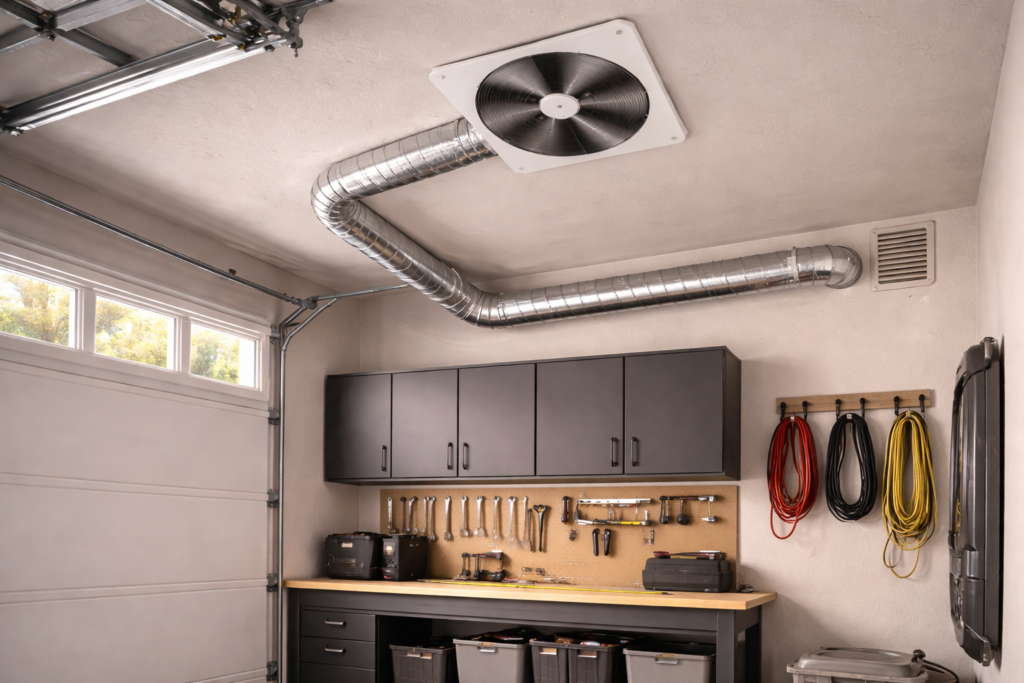
When a fan is installed in the ceiling, air must usually travel through ductwork before exiting the building.
In these systems, the fan connects to a duct that vents outside through:
• A roof vent
• An exterior wall vent
• A soffit vent (in some cases)
Ductwork should be as short and straight as possible to reduce airflow resistance.
If you’re comparing installation styles, see wall vs ceiling garage ventilation fans.
Choosing the Right Exterior Vent
The exterior vent cover protects the opening where air exits the building.
These covers usually include features such as:
• Weather protection
• Pest screens
• Backdraft dampers
A backdraft damper prevents outside air from flowing back into the garage when the fan is not running.
You can learn more about this component in do garage ventilation fans need backdraft dampers.
Keeping Duct Runs Short
If ductwork is used, keeping the duct run short helps maintain airflow performance.
Long duct runs can reduce the fan’s ability to move air effectively.
Good duct installation practices include:
• Using the shortest possible route
• Avoiding sharp bends
• Sealing duct joints properly
These steps help maintain airflow efficiency and reduce energy loss.
Sealing the Vent Opening
Any opening created for the ventilation fan must be sealed properly to prevent air leaks.
This usually involves:
• Weatherproof caulking around the vent cover
• Flashing or sealing around roof penetrations
• Tight mounting of the fan housing
Proper sealing prevents moisture, insects, and outside air from entering the garage.
Ensuring Proper Airflow
A ventilation fan can only remove air effectively if fresh air can enter the garage.
Without an intake path, the fan will struggle to move air.
Fresh air typically enters through:
• Gaps around the garage door
• Windows
• Passive intake vents
Airflow should move across the garage toward the exhaust fan.
To determine how much airflow your system should provide, see how much airflow (CFM) a garage needs.
Conclusion
Venting a garage exhaust fan outside is essential for proper ventilation. Exhaust air must leave the building through a wall vent, roof vent, or exterior duct outlet.
Direct wall venting is often the simplest and most effective method, while ceiling installations may require ductwork to reach the exterior.
When properly installed, a ventilation fan can remove hot air, fumes, and stale air from the garage while allowing fresh air to replace it.
For a complete overview of how these systems work, see our guide to garage ventilation fans.