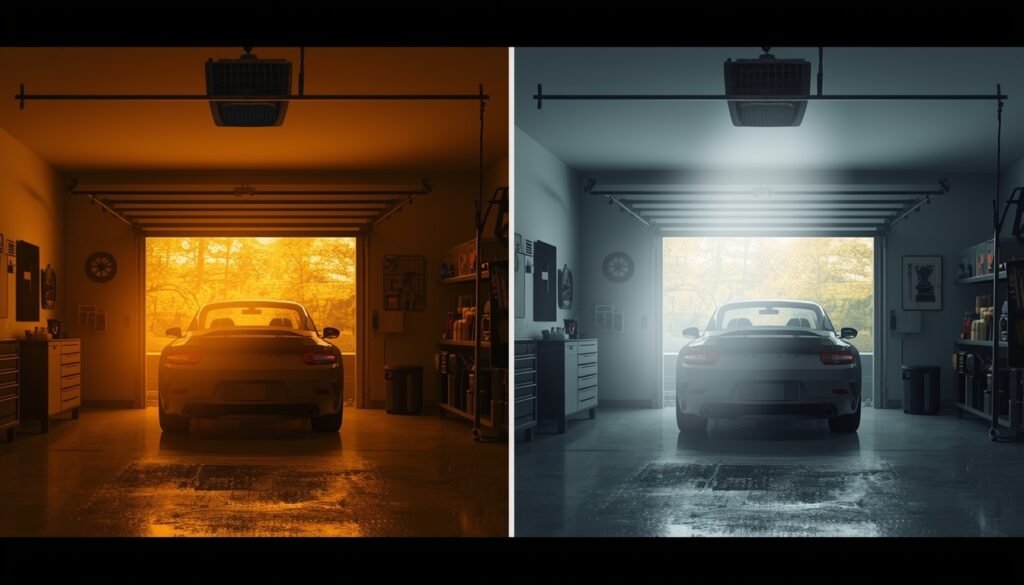
In most homes, it typically takes anywhere from a few minutes to over an hour for a garage to feel noticeably more comfortable with a ventilation fan, depending on airflow, outside temperature, and how much heat has built up. A common issue is expecting fast cooling, but many people find that fans improve airflow quickly while temperature changes happen more gradually.
In most homes, garage ventilation fans begin moving hot air out almost immediately. A common issue is assuming this will instantly cool the space. Many people find that while the air feels less stagnant within minutes, reducing overall heat takes longer as stored heat in walls, ceilings, and floors continues to affect the space.
What Affects How Long It Takes to Cool
- Size of the garage
- Fan airflow capacity (CFM)
- Outside air temperature
- Amount of heat stored in the structure
- Airflow path and ventilation setup
These factors determine whether the space feels better in minutes or takes much longer to improve.
What Happens in the First Few Minutes
In most homes, the first noticeable change is improved airflow.
A common issue is expecting temperature to drop immediately. Many people find that the air begins to move and feel fresher within minutes, even if the heat is still present.
This typically happens because:
- Hot air is pushed out of the garage
- Air circulation improves
- Stagnant air is replaced
This creates a more comfortable environment quickly, even without a large temperature drop.
Why Cooling Takes Longer Than Expected
In most homes, garages store a significant amount of heat.
A common issue is heat retention in materials. Many people find that even after airflow improves, the space still feels warm.
This typically happens because:
- Walls and roof absorb heat during the day
- Concrete floors retain warmth
- Stored heat continues to radiate into the space
The fan must gradually remove this heat over time.
When Cooling Happens Faster
Cooling improves more quickly when conditions are favorable.
- Outside air is cooler than inside
- The garage is shaded or insulated
- The fan has high airflow capacity
- Air can flow freely through the space
- Heat sources inside the garage are limited
In these situations, many people find that comfort improves within a short period.
When It Takes Much Longer
Cooling may take significantly longer when conditions are working against the system.
- Outside air is hot
- The garage has heavy sun exposure
- Insulation is poor
- The fan is undersized
- Airflow is restricted
In most homes, these factors slow down how quickly heat can be removed.
Why Ventilation Feels Different From Cooling
In most homes, ventilation improves comfort before it reduces temperature.
A common issue is expecting cold air rather than moving air. Many people find that the garage feels better even if the temperature has not dropped much.
This typically happens because airflow helps remove heat buildup and reduces that “trapped heat” feeling.
If you’re unsure how effective ventilation systems are overall, it helps to review do garage ventilation fans actually work to understand what they can realistically achieve.
What Affects Cooling Performance
- Fan size and airflow (CFM)
- Garage size and layout
- Intake and exhaust airflow paths
- Outside weather conditions
- Heat sources inside the garage
These factors determine how efficiently the fan can improve conditions.
When a Fan Won’t Cool the Garage Much
There are situations where ventilation has limited impact.
A common issue is trying to cool a garage in very hot conditions. Many people find that even with airflow, the space remains warm.
This typically happens when:
- Outdoor air is hot
- Heat is continuously entering the garage
- Insulation is minimal
If your garage still feels too hot despite ventilation, it helps to review why your garage is so hot even with ventilation to identify contributing factors.
Quick Ways to Improve Results
- Use a higher CFM fan for better airflow
- Improve airflow pathways for intake and exhaust
- Reduce direct sunlight entering the garage
- Improve insulation where possible
- Limit heat sources inside the space
These steps often improve how quickly the garage feels more comfortable.
Final Thoughts
In most homes, cooling a garage with a fan is a gradual process rather than an instant change. A common issue is expecting immediate temperature drops when ventilation mainly improves airflow first.
Many people find that while comfort improves quickly, reducing overall heat takes time as stored heat is removed from the space. This typically leads to better airflow, less trapped heat, and a more usable environment.
By understanding how ventilation works and what affects cooling time, you can set realistic expectations and get better results from your garage ventilation fan.
Related Guides
Where Should a Garage Ventilation Fan Be Installed?
How to Vent a Garage Exhaust Fan Outside
Garage Ventilation Fan Installation Cost Guide