Introduction
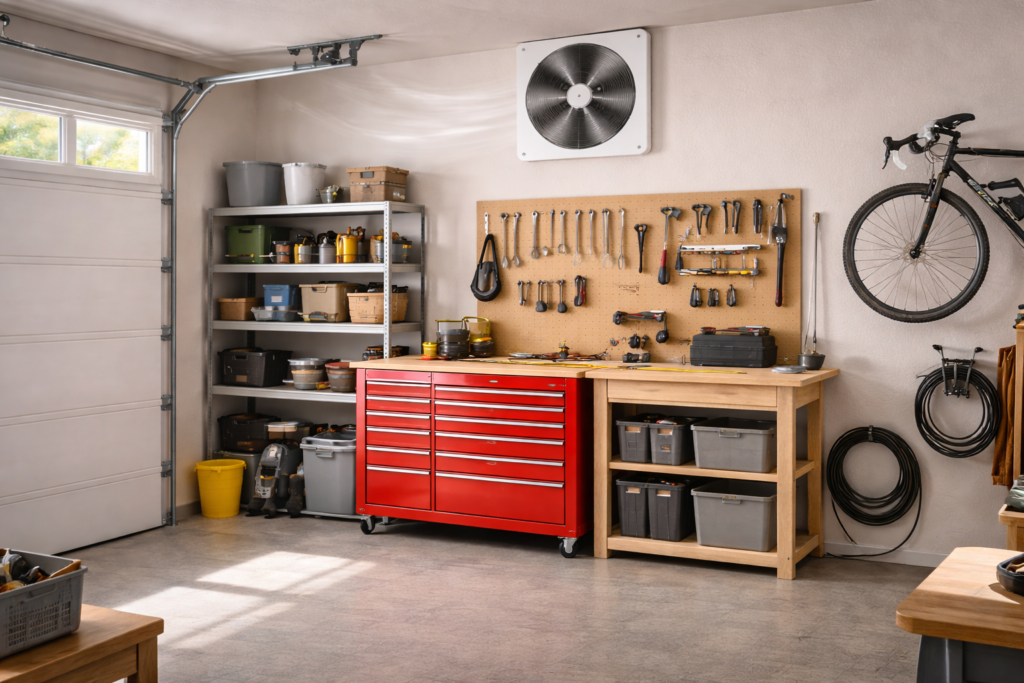
Garage ventilation fans are often installed to improve airflow and remove heat from enclosed garage spaces. Many homeowners expect these fans to cool the garage in the same way an air conditioner would.
However, ventilation fans do not technically cool the air. Instead, they remove hot air from the garage and replace it with outside air.
This process can reduce the temperature inside the garage, especially when heat buildup is caused by trapped air.
If you’re unfamiliar with how garage ventilation works, it may help to first read what a garage ventilation fan is and how it works.
Why Garages Get So Hot
Garages often trap heat because they have limited airflow and large surfaces that absorb sunlight.
Several factors contribute to high garage temperatures:
• Sunlight heating the roof and garage door
• Warm air entering when vehicles are parked
• Lack of windows or airflow openings
• Insulated doors that trap heat inside
Once hot air accumulates inside the garage, it tends to remain trapped near the ceiling unless it is removed.
How Ventilation Fans Remove Heat
Ventilation fans reduce heat by exhausting hot air from the garage.
As the fan pulls hot air outside, fresh air enters through gaps, vents, or the garage door. This constant air exchange helps prevent hot air from accumulating.
Because hot air naturally rises, ventilation fans are typically installed near the ceiling where heat collects.
For more guidance on placement, see where a garage ventilation fan should be installed.
Ventilation vs Air Conditioning
A ventilation fan works differently than an air conditioner.
An air conditioner cools air using refrigeration technology. A ventilation fan simply moves air.
Because of this difference:
• Ventilation fans remove heat buildup
• Air conditioners actively cool the air
If the outside air is cooler than the garage air, ventilation can noticeably lower the garage temperature.
If outside air is extremely hot, ventilation may provide limited cooling.
If your garage still feels hot despite ventilation, see why your garage is so hot even with ventilation
Airflow Makes the Biggest Difference
The effectiveness of a ventilation fan depends heavily on how much air it can move.
Fans are rated using airflow measurements called cubic feet per minute (CFM).
Higher airflow allows the fan to remove hot air more quickly.
If you want to understand airflow requirements, see how much airflow (CFM) a garage needs.
Choosing the correct fan size helps ensure the ventilation system works effectively.
Situations Where Ventilation Helps the Most
Ventilation fans are especially helpful in certain types of garages.
These include:
• Garages that receive strong afternoon sun
• Attached garages where heat builds up quickly
• Garages used as workshops
• Garages with poor natural airflow
Ventilation can also help remove vehicle exhaust and chemical fumes.
If you’re unsure whether ventilation is necessary for your space, see when a garage ventilation fan makes sense.
When Ventilation May Not Reduce Temperature Much
There are situations where ventilation fans provide less noticeable cooling.
For example:
• Extremely hot outdoor temperatures
• Poor airflow intake into the garage
• Undersized ventilation fans
• Garages with heavy insulation trapping heat
In these cases, ventilation may still improve air quality even if temperature reduction is modest.
Improving Heat Reduction
Several steps can improve how well a ventilation fan reduces garage heat.
These include:
• Installing the fan high on the wall or ceiling
• Ensuring fresh air can enter the garage
• Choosing the correct CFM rating
• Venting air directly outside
Proper installation and sizing usually have a larger impact than the fan type itself.
Conclusion
Garage ventilation fans can reduce heat buildup by exhausting hot air and allowing fresh air to replace it. While they do not cool air like an air conditioner, they can significantly improve comfort in garages where heat accumulates.
When properly sized and installed, ventilation fans help prevent hot air from becoming trapped and improve overall airflow inside the garage.
For a complete overview of how these systems work, see our guide to garage ventilation fans.