Introduction
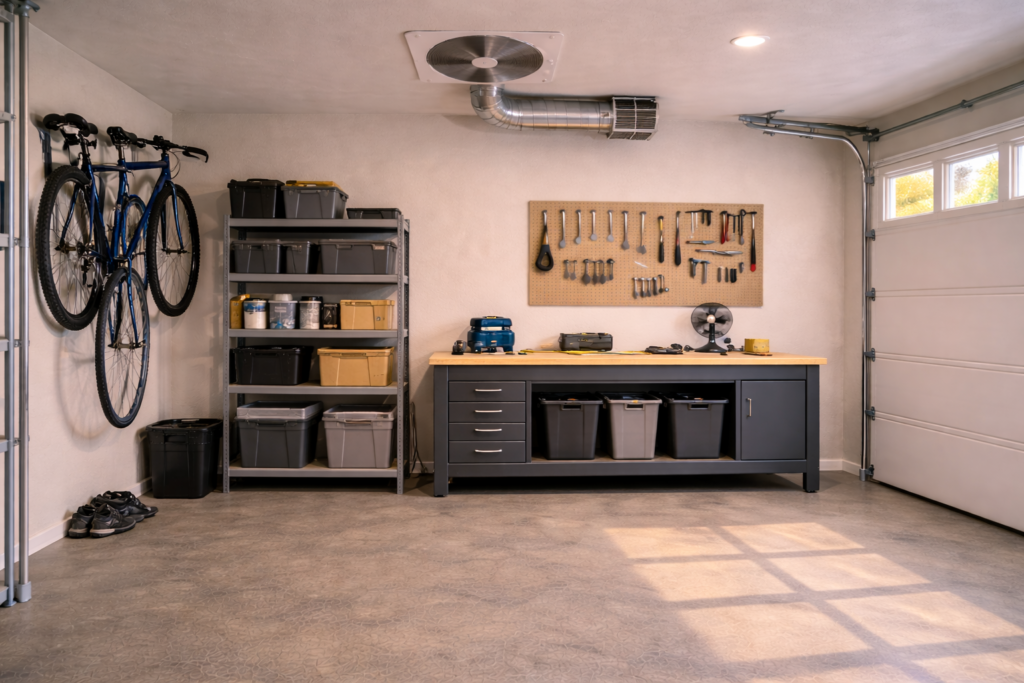
Ceiling-mounted garage exhaust fans provide an alternative to wall-mounted ventilation systems. Instead of venting directly through an exterior wall, these fans are installed in the ceiling and exhaust air through ductwork that leads outside.
This setup can work well in garages where exterior wall placement is difficult or where the garage layout makes ceiling installation more practical.
Choosing the right ceiling-mounted fan depends on airflow capacity, installation requirements, and the size of the garage.
If you’re comparing installation methods, see wall vs ceiling garage ventilation fans.
Understanding the differences between installation styles can help determine which option is best for your garage.
Why Choose a Ceiling-Mounted Garage Fan
Ceiling-mounted fans can provide effective ventilation in garages where wall installation is not practical.
Common advantages include:
• Removing hot air where it naturally collects
• Flexible duct routing to exterior vents
• Less wall space used for equipment
• More discreet appearance inside the garage
Because heat rises, ceiling-mounted fans can be very effective at removing hot air from the upper part of the garage.
Best Ceiling-Mounted Garage Exhaust Fans
Below are several types of ceiling-mounted exhaust fans commonly used in garages.
Panasonic WhisperCeiling Ventilation Fan
Panasonic WhisperCeiling fans are known for quiet operation and reliable airflow.
Key features include:
• Energy-efficient motor design
• Quiet operation
• Durable fan housing
• Ceiling-mounted installation
These fans are often used in garages that require quieter ventilation.
Broan-NuTone Ceiling Exhaust Fan
Broan-NuTone fans are widely used in residential ventilation systems.
Typical features include:
• Reliable airflow performance
• Simple ceiling installation
• Multiple airflow capacity options
• Durable construction
These fans are commonly used in garages where moderate airflow is needed.
Delta Breez Ceiling Ventilation Fan
Delta Breez fans are designed for energy-efficient ventilation and quiet operation.
Common features include:
• Brushless motor technology
• Quiet operation
• Compact ceiling design
• Long motor lifespan
These fans can be a good option when quieter ventilation is preferred.
Airflow Capacity Considerations
Airflow capacity is an important factor when selecting any garage ventilation fan.
Fans are rated by CFM (cubic feet per minute), which indicates how much air they can move.
Larger garages require fans with higher airflow ratings to remove heat effectively.
If you are determining the airflow needs for your garage, see how much airflow (CFM) a garage needs.
Choosing a fan with adequate airflow ensures the ventilation system performs effectively.
Installation Requirements
Ceiling-mounted ventilation fans typically require ductwork to vent air outside.
Common installation components include:
• Ventilation fan housing
• Ductwork connecting to the exterior vent
• Roof or wall vent cap
• Electrical wiring for the fan
Because these systems often require duct routing and electrical work, installation may be more complex than wall-mounted fans.
If you’re evaluating the venting setup, see how to vent a garage exhaust fan outside.
Proper duct installation helps maintain airflow efficiency.
When Ceiling-Mounted Fans Work Best
Ceiling-mounted fans are often used in garages where:
• Exterior wall installation is difficult
• The garage layout favors ceiling ventilation
• The fan needs to be positioned above a central area
• The homeowner prefers a less visible ventilation system
In these situations, ceiling-mounted fans can provide effective airflow while maintaining a cleaner wall layout.
Installation Difficulty
Ceiling-mounted fans are often more complex to install than wall-mounted fans.
This is because installation may require:
• Cutting an opening in the ceiling
• Running ductwork through the attic
• Installing a roof or wall vent cap
• Connecting electrical wiring
In some cases, homeowners may choose professional installation for these systems.
If you’re considering installing a fan yourself, see can you install a garage ventilation fan yourself.
Understanding installation requirements can help determine the best approach.
Conclusion
Ceiling-mounted garage exhaust fans provide an effective ventilation option when wall installation is not practical.
By removing hot air from the highest part of the garage and venting it outside through ductwork, these fans can improve airflow and reduce heat buildup.
Selecting the right airflow capacity and ensuring proper duct installation are important steps for achieving effective garage ventilation.
For a complete overview of how these systems work, see our guide to garage ventilation fans.