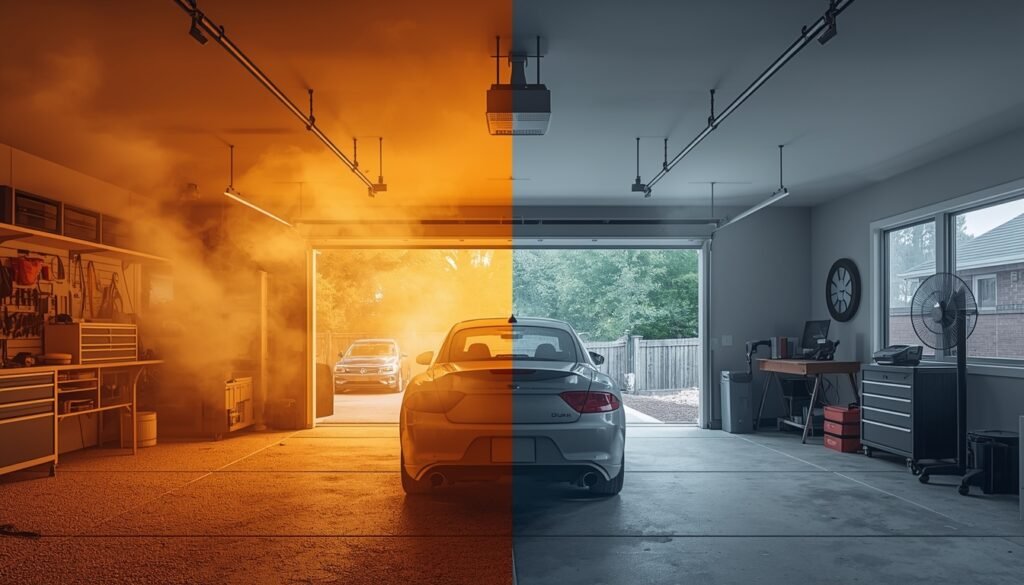
In most homes, garage ventilation fans can reduce heat and improve airflow, but they do not actively cool the space like an air conditioner. A common issue is expecting a fan to lower temperatures significantly, but many people find that these systems mainly remove hot air rather than create cold air.
In most homes, garage ventilation fans work by moving hot, stale air out and drawing in cooler outside air. A common issue is misunderstanding how this affects temperature. Many people find that the garage feels more comfortable, even if the actual temperature drop is limited.
What Garage Ventilation Fans Actually Do
Garage ventilation fans are designed to improve airflow, not generate cooling.
A common issue is assuming they function like air conditioning systems. Many people find that the main benefit is reducing heat buildup rather than lowering the temperature dramatically.
This typically happens because:
- Hot air is pushed out of the garage
- Fresh air is pulled in from outside
- Air circulation prevents heat from becoming trapped
This creates a more stable and breathable environment.
When Garage Ventilation Fans Work Well
- The outside air is cooler than the garage
- The garage is enclosed and traps heat
- Airflow pathways are clear and unobstructed
- The fan is correctly sized for the space
- The unit is installed in an effective location
In these situations, many people find that the garage becomes noticeably less hot and more comfortable.
When They Don’t Work As Expected
- Outside air is just as hot or hotter than inside
- The garage has poor airflow design
- The fan is undersized
- There is no clear intake air path
- Heat sources inside the garage are significant
In most homes, performance issues are usually caused by these factors rather than the fan itself.
Why Ventilation Doesn’t Always Feel Like Cooling
In most homes, ventilation reduces heat buildup but does not actively cool the air.
A common issue is expecting the same result as an air conditioner. Many people find that while airflow improves, the temperature may not drop as much as expected.
This typically happens because:
- The fan removes heat but does not chill air
- Incoming air may still be warm
- Heat continues to enter from walls and roof
This means the benefit is often felt as improved comfort rather than a large temperature drop.
What Affects How Well a Fan Works
- Size of the garage
- Outside air temperature
- Fan airflow capacity (CFM)
- Placement of the fan
- Availability of intake air
These factors determine how effectively heat can be removed.
How Long It Takes to Notice Results
In most homes, ventilation fans begin improving airflow quickly.
A common issue is expecting instant temperature change. Many people find that the garage gradually becomes more comfortable as air circulates.
This typically happens within minutes for airflow improvement, but longer for noticeable comfort changes.
If you want to understand how airflow capacity impacts performance, it helps to review how much airflow (CFM) does a garage need to match your space correctly.
When a Fan Is Not Enough
There are situations where ventilation alone cannot solve the problem.
A common issue is relying on a fan in extremely hot conditions. Many people find that the garage remains warm even with airflow.
This typically happens when:
- Heat levels are very high
- Insulation is poor
- Sun exposure is significant
If your garage still feels hot despite ventilation, it helps to review why your garage is still hot after installing a ventilation fan to identify possible causes.
Quick Ways to Improve Results
- Choose a fan with adequate airflow capacity
- Ensure proper placement for airflow movement
- Provide a clear path for fresh air intake
- Reduce heat sources inside the garage
- Improve insulation where possible
These steps often improve performance without changing the system.
Final Thoughts
In most homes, garage ventilation fans do work, but their role is often misunderstood. A common issue is expecting them to cool the space like an air conditioner, when they are designed to improve airflow and reduce heat buildup.
Many people find that when properly sized and installed, these fans make the garage more comfortable and usable. This typically leads to better airflow, less trapped heat, and improved overall conditions.
By understanding how ventilation works and what to expect, you can get the most benefit from a garage ventilation fan without unrealistic expectations.
Related Guides
Where Should a Garage Ventilation Fan Be Installed?
How to Vent a Garage Exhaust Fan Outside
Garage Ventilation Fan Installation Cost Guide