Introduction
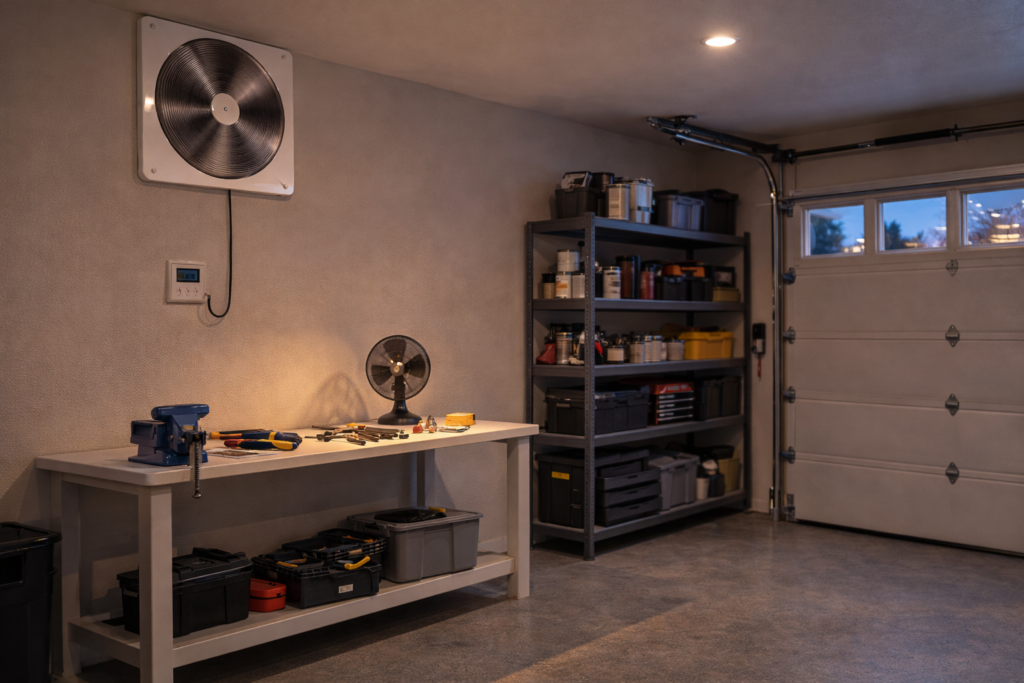
Garage ventilation fans are designed to remove hot air, fumes, and stale air from enclosed garage spaces. In many cases, the fan operates only when it is manually switched on. However, some homeowners notice that their ventilation fan seems to run continuously.
In some situations this is completely normal, especially if the fan is connected to an automatic control system. In other cases, constant operation may indicate a setup or wiring issue.
Understanding why a garage ventilation fan runs continuously can help determine whether the system is functioning as intended.
If you’re unfamiliar with how garage ventilation systems work, see what a garage ventilation fan is and how it works.
Fans Designed for Continuous Operation
Some ventilation fans are designed to run continuously.
Continuous operation is sometimes used when:
• The garage has poor natural airflow
• The fan is removing fumes or odors regularly
• The garage is used as a workshop
• The system is part of a larger ventilation strategy
In these situations, running the fan continuously helps maintain consistent airflow.
However, most residential garage fans are typically operated only when ventilation is needed.
Thermostat or Temperature Controls
Some ventilation systems include temperature-based controls.
These thermostats automatically turn the fan on when the garage temperature reaches a certain level.
If the temperature remains high, the fan may continue running for long periods.
This is common in hot climates where garages retain heat throughout the day.
If heat buildup is a concern in your garage, see do garage ventilation fans actually reduce heat.
Humidity Sensors
Some ventilation systems use humidity sensors to control the fan.
If humidity levels remain elevated, the fan may continue running until the moisture level decreases.
This type of system is more common in spaces where moisture buildup occurs frequently.
Wiring or Switch Issues
If the fan runs continuously even when it should be off, there may be an electrical issue.
Possible causes include:
• Incorrect wiring during installation
• A faulty wall switch
• A stuck relay or control device
• A fan connected directly to power without a switch
In these cases, inspecting the wiring or electrical controls may resolve the issue.
To better understand the electrical setup of ventilation systems, see electrical requirements for garage ventilation fans.
Smart or Automated Ventilation Systems
Some garages use automated ventilation systems designed to manage airflow automatically.
These systems may run frequently or continuously depending on environmental conditions.
Examples include systems that respond to:
• Temperature levels
• Air quality sensors
• Humidity levels
• Timed schedules
In these setups, constant operation may be part of the system’s normal behavior.
Energy and Wear Considerations
Running a ventilation fan continuously may increase energy use and wear on the fan motor over time.
Most residential ventilation fans use relatively small motors, so energy consumption is usually modest.
However, if continuous operation is not necessary, installing a timer or thermostat control may help reduce runtime.
When Continuous Operation May Be Helpful
In some garages, continuous operation may actually improve conditions.
For example, running the fan consistently may help:
• Remove vehicle fumes
• Reduce heat buildup
• Maintain airflow in tightly sealed garages
If your garage has poor ventilation, see when a garage ventilation fan makes sense.
Improved airflow can make the garage more comfortable and safer to use.
Conclusion
A garage ventilation fan running constantly may be normal depending on how the system is designed.
Fans connected to thermostats, humidity sensors, or automated controls may run frequently to maintain proper airflow.
However, if the fan runs continuously without a clear reason, checking the wiring, controls, or switch may help identify the cause.
For a complete overview of how these systems work, see our guide to garage ventilation fans.