Introduction
Attached garages can trap heat, vehicle exhaust, and chemical fumes that may eventually enter the home. Because the garage shares a wall or ceiling with living space, air quality and ventilation are especially important.
In many homes, garages have limited airflow and rely only on small gaps around the garage door for ventilation. This often allows heat and stale air to build up inside the space.
Installing a garage ventilation fan can help improve airflow and reduce the accumulation of fumes and heat.
If you want to understand the basics of how these systems work, see what a garage ventilation fan is and how it works.
Why Attached Garages Can Trap Air
Attached garages often have fewer ventilation openings than detached garages.
Several factors contribute to poor airflow in attached garages:
• Limited windows or vents
• Tight construction designed to reduce energy loss
• Shared walls with the home
• Insulated garage doors that trap warm air
Because these garages are often sealed more tightly, heat and fumes may remain trapped unless active ventilation is added.
Air Quality Concerns in Attached Garages
One of the main reasons homeowners consider garage ventilation is to manage air quality.
Common air contaminants in garages include:
• Vehicle exhaust fumes
• Gasoline vapors
• Paint or solvent fumes
• Dust and workshop particles
• Lawn equipment emissions
Without proper airflow, these pollutants can accumulate in the garage and may eventually enter the home through small air leaks.
Ventilation helps remove these contaminants and replace the air with fresh outdoor air.
Heat Buildup in Attached Garages
Attached garages can also become very hot, especially during warmer months.
This happens when:
• Sunlight heats the roof and garage door
• Warm air becomes trapped near the ceiling
• The garage lacks airflow to remove hot air
A ventilation fan helps reduce heat buildup by exhausting hot air from the garage and allowing cooler air to enter.
You can learn more about this process in do garage ventilation fans actually reduce heat.
How Ventilation Fans Help
Garage ventilation fans improve airflow by removing stale or contaminated air and exhausting it outside.
As the fan removes air from the garage, fresh air naturally enters through small openings such as:
• Garage door gaps
• Intake vents
• Windows
• Wall openings
This continuous air exchange helps keep the garage environment healthier and more comfortable.
The effectiveness of the system depends on how much air the fan can move.
If you want to understand airflow sizing, see how much airflow (CFM) a garage needs.
When Ventilation Is Most Important
Ventilation becomes especially important in attached garages used for certain activities.
These include:
• Parking vehicles regularly
• Operating lawn equipment
• Running power tools
• Storing chemicals or fuel
• Using the garage as a workshop
In these situations, removing fumes and improving airflow can help prevent air quality problems.
If you’re unsure whether installing a fan is worthwhile, see when a garage ventilation fan makes sense.
Choosing the Right Fan Location
Proper fan placement helps ensure that air moves efficiently through the garage.
Most ventilation fans are installed:
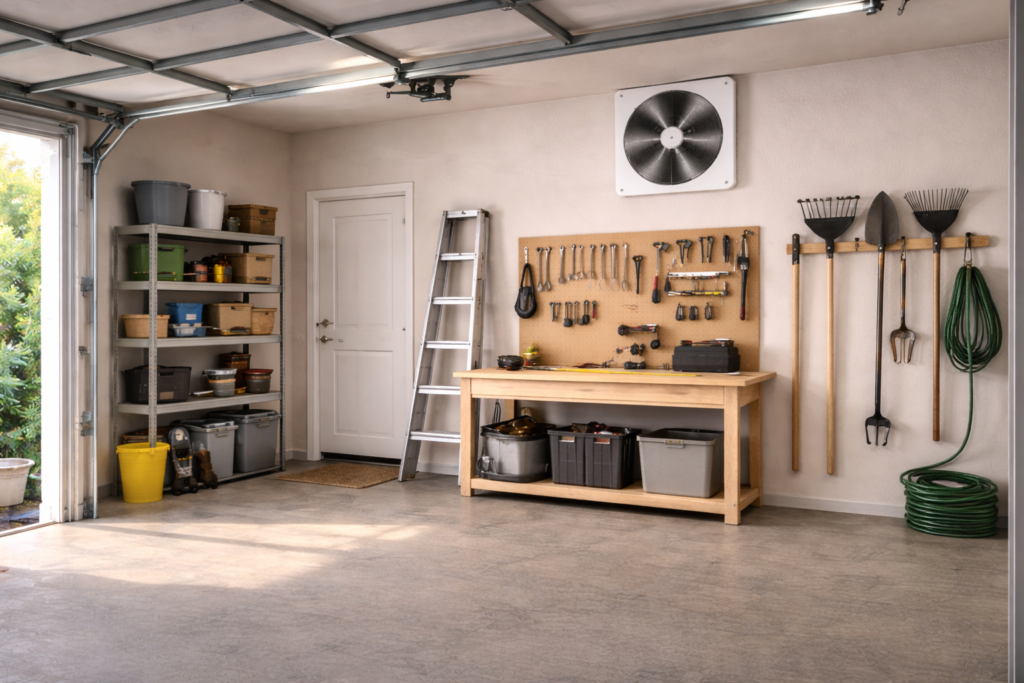
• High on an exterior wall
• Near the ceiling
• In a location where hot air collects
This allows the fan to remove warm air and contaminants as they rise.
For guidance on placement, see where a garage ventilation fan should be installed.
Conclusion
Ventilation is often beneficial in attached garages because these spaces can trap heat, fumes, and stale air.
A properly installed garage ventilation fan helps remove contaminated air and improve overall airflow. This can reduce heat buildup, improve air quality, and create a more comfortable garage environment.
For homes where the garage shares walls with living space, maintaining good ventilation is an important part of managing both comfort and indoor air quality.
For a complete overview of how these systems work, see our guide to garage ventilation fans.